Best Portable Solar Generators for Off-Grid Living UK 2025
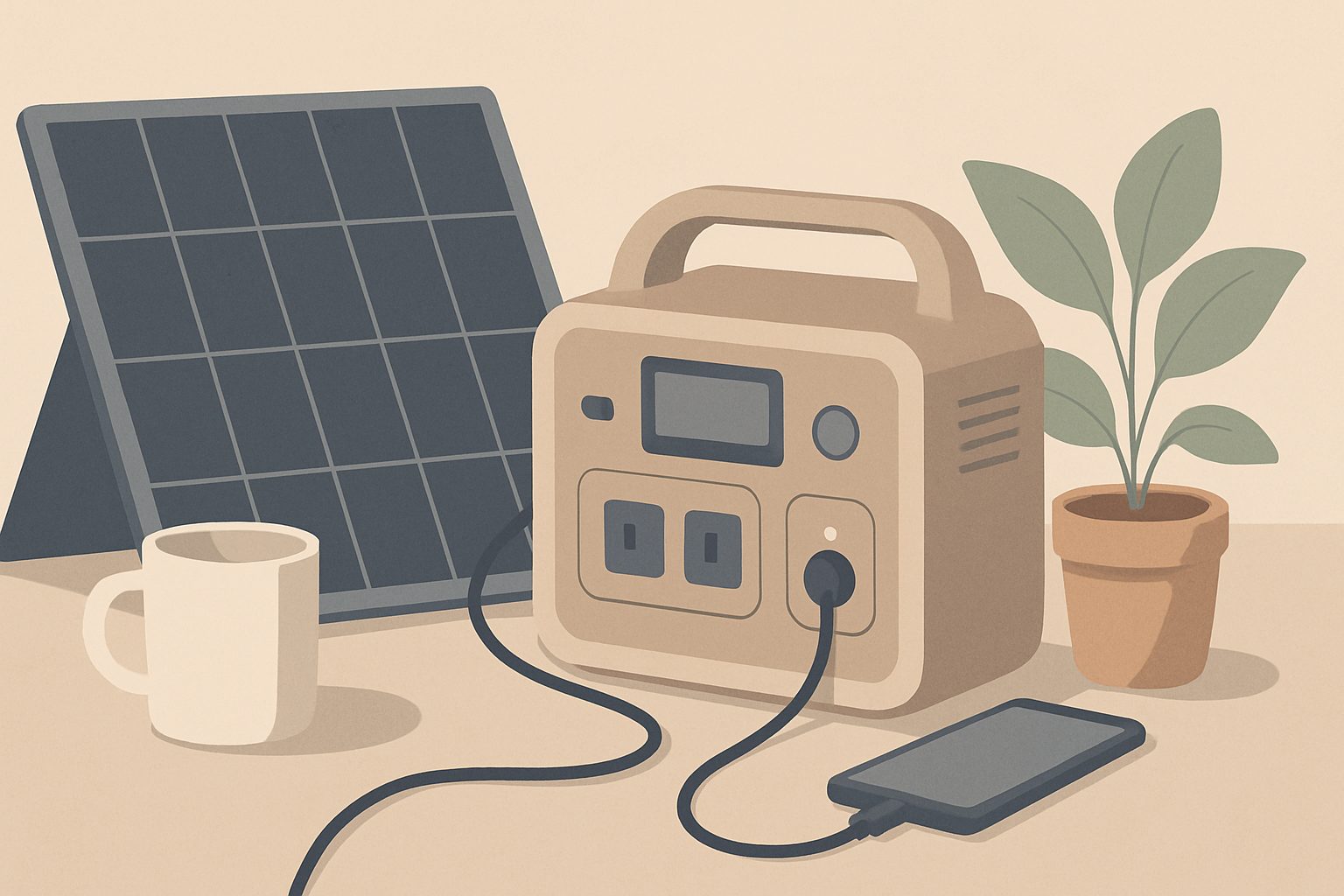
Off-grid living in the UK presents a unique challenge: your solar setup must perform reliably with lower irradiance than most global benchmarks, unpredictable weather patterns, and potentially long winter months with minimal sunlight. A portable solar generator sits at the heart of this system, storing energy from your panels and powering essentials when the sun isn't shining. The best units for UK off-grid applications prioritise expandable capacity, efficient MPPT charging controllers, and battery chemistry that handles frequent cycling without degradation.
Why Portable Solar Generators Work for UK Off-Grid Setups
Portable solar generators—essentially battery storage with an integrated inverter and charge controller—offer flexibility that fixed installations can't match. You can relocate them indoors during severe weather, expand capacity seasonally, or scale your system in phases as budget allows. This modularity is particularly valuable if you're testing off-grid feasibility before committing to a full-scale ground-mounted array.
For UK conditions, a high-capacity portable unit (8–15 kWh) paired with expandable battery modules covers most household needs. The key is matching storage to your consumption patterns and available roof or ground space for solar panels. British off-grid dwellers typically need 5–7 kWh daily during winter, rising to 10–15 kWh in summer.
Critical Features for UK Off-Grid Use
LiFePO4 vs Lithium-ion: Most quality portable generators now use LiFePO4 (lithium iron phosphate) chemistry, and for off-grid living, this is essential. LiFePO4 cells tolerate 4,000–6,000 charge cycles, compared to 1,000–2,000 for older lithium-ion packs. In off-grid scenarios where you're cycling daily year-round, that extra lifespan translates to real savings. LiFePO4 also performs better in cold weather and discharges more slowly, both relevant for UK winters.
MPPT Solar Charge Controllers: An MPPT (maximum power point tracking) controller extracts 20–30% more energy from your solar panels than older PWM (pulse-width modulation) units. Given the UK's modest average irradiance (roughly 3–4 peak sun hours daily), that efficiency gain matters. Look for units with input ratings of 3,000–4,000W; this allows you to connect multiple panels without bottlenecking your charging.
Expandability: The best off-grid generators let you stack additional battery modules. This avoids replacing your entire unit if consumption grows or winter proves longer than expected. Modular expansion typically costs 30–40% less per kWh than buying a new generator outright.
Temperature Management: UK damp conditions and temperature swings demand robust battery management. Integrated battery management systems (BMS) should monitor individual cell voltage, temperature, and current draw to prevent thermal runaway or premature failure. Units with passive or active cooling are preferable, though most modern designs handle this adequately.
Real-World Considerations for British Off-Grid Life
Winter is your bottleneck. December and January see 60–70% less solar energy than June, and cloud cover is frequent. A portable generator sized only for summer output leaves you burning through backup fuel (petrol, wood, mains grid if available) in winter. Size your primary unit for winter baseline demand, then let summer surplus top it up and charge expandable modules.
Roof or ground space determines your panel count, which caps daily charging. A 4 kW array on a small cottage roof might generate 12–16 kWh on a clear June day but only 2–3 kWh in December. Your generator's storage bridges this gap; the larger your battery, the more "bad weather buffer" you have.
Cloud glare and reflection off water or snow can boost winter output by 10–15%, a small but real advantage in rural UK settings. Positioning panels to maximise low-angle winter sun (south-facing at 35–40° tilt) matters more than optimising for peak summer output.
What to Look for When Choosing
Start by calculating your daily consumption in watt-hours. A small off-grid cabin (heating, lighting, refrigeration, occasional cooking) uses 8–15 kWh daily in winter. A base portable unit should hold at least 10–12 kWh of usable capacity; lithium generators typically usable to 95%+ depth of discharge, whereas older lead-acid could only manage 50%.
Check the solar input rating and charge speed. A unit with 3,500W MPPT input can charge a 10 kWh battery in one good day of sun; slower units (≤1,500W) might need two days, leaving little margin if cloud follows.
Inverter quality affects real-world reliability. Pure sine-wave inverters (standard on quality units) work with all appliances; cheap pseudo-sine inverters can damage sensitive electronics. For off-grid living, 5,000–8,000W continuous output handles most simultaneous loads without shutdown.
Warranty and support matter more than with grid-tied systems. You won't have a network engineer on call. Look for 5–10 year battery warranties and manufacturers with active UK support teams.
Final Thoughts
The best portable solar generator for UK off-grid living isn't the largest or cheapest—it's the one sized to your winter consumption, backed by LiFePO4 chemistry and MPPT efficiency, and expandable as your needs grow. Plan for multiple generators if you need more than 15 kWh capacity; they're easier to manage in pairs than as one massive unit, and redundancy matters when you're off-grid.
Actual performance will vary with weather, panel placement, and consumption habits. Conservative sizing—building in a buffer for poor winters and unexpected loads—beats undersizing and scrambling through February on fumes.
More options
- EcoFlow DELTA Pro Portable Power Station (Amazon UK)
- Jackery Explorer 2000 Plus Solar Generator (Amazon UK)
- Bluetti AC200P Portable Power Station (Amazon UK)
- EcoFlow 220W Bifacial Solar Panel (Amazon UK)
- Jackery SolarSaga 200W Solar Panel (Amazon UK)