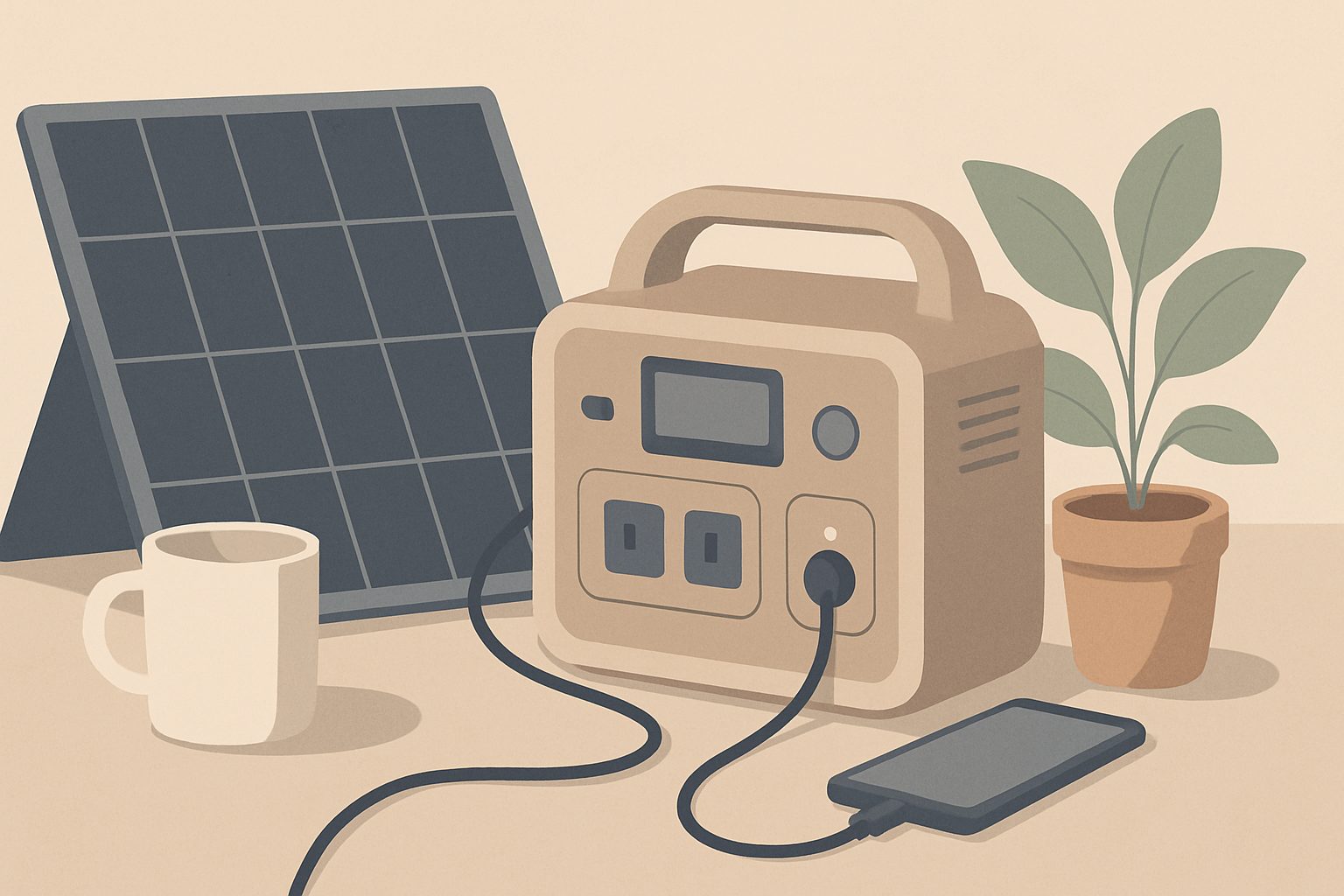
Can a Solar Generator Power a Whole House in the UK? (Honest Answer)
The short answer: not reliably, not cheaply, and not without major trade-offs. But that doesn't mean large-capacity solar generators are pointless for UK homes—you just need realistic expectations.
What Does Your House Actually Need?
The average UK household uses 8–10kWh per day. That's enough to power lights, heating controls, a fridge, computing devices, and occasional appliance use. But it's spread across 24 hours, and most of it happens in winter when the sun barely shows up.
A solar generator does two things: it stores electrical energy in a battery, and it charges via solar panels. The mismatch between UK weather and household demand is the core problem. You can't generate enough solar in December to power your house in December. You could bank summer surplus for winter, but that would require prohibitively expensive battery storage (tens of thousands of pounds).
What Large-Capacity Generators Can Actually Do
High-end units like the EcoFlow DELTA Pro Ultra (20kWh usable capacity) represent the upper end of portable solar generators. At full charge, one could theoretically run an average UK home for two days with zero solar input. In practice:
- Peak-shaving: You run the house off-grid during peak-rate hours (expensive afternoon/early evening), then recharge overnight from cheap rate electricity or daytime solar. This cuts bills but doesn't eliminate grid dependence.
- Backup power: When the grid fails, you have 1–2 days of stored energy before you need alternative fuel or daylight charging.
- Load prioritisation: You run some things off the generator (fridge, heating, hot water, essentials) and pause others (electric shower, dishwasher, EV charging).
None of this is "powering a whole house" in the sense of running everything, all the time, independently.
The Reality Check: System Size vs. Cost
To meaningfully reduce grid reliance in the UK, you'd need:
- 10–15kWh of battery capacity (£4,000–£8,000 upwards for quality units)
- 4–6kW of rooftop solar panels (£6,000–£10,000 after installation)
- An inverter and charge controller (£500–£2,000)
- Weatherproofing and electrical safety certification
That's £11,000–£20,000+ before you factor in wiring, mounting, and ongoing maintenance. Over 15 years, a grid connection costs roughly £3,000–£4,000. You're not breaking even unless you're also avoiding grid charges entirely—which, in the UK's temperate climate, you can't.
Load-Shedding: The Realistic Strategy
Rather than trying to power the whole house, people who own large solar generators use them strategically:
- Essential circuits: Fridge, freezer, heating system, hot water, lights, sockets for devices. This might be 2–4kWh per day even in winter.
- Weather-dependent use: Dishwasher, laundry, charging devices—timed for sunny afternoons when solar output peaks or battery charge is highest.
- Grid connection remains: You stay connected but draw from the generator or solar first, import from the grid only when needed.
This approach cuts bills by 15–30% depending on your behaviour, consumption pattern, and panel size. It's not dramatic, but it's honest.
When Large Generators Make Sense
A high-capacity solar generator setup becomes worthwhile if you:
- Live somewhere with frequent grid outages (not typical for urban UK, but relevant for rural homes or those prone to storms).
- Want to decouple from rising energy prices over the next decade without getting a full grid-tied solar array.
- Have the roof space, capital, and patience for a 15–20 year payback horizon.
- Value resilience and energy independence as much as the financial return.
- Can shift consumption patterns (e.g., working from home with flexible hours to charge during peak solar).
Why the UK Climate Matters
Germany, sunnier than the UK and with stronger incentives, pioneered grid-tied residential solar. Even there, a home rarely achieves full self-sufficiency without seasonal battery storage (which barely exists at scale) or severely curtailing winter consumption. The UK's winter solar irradiance is roughly 40% of summer. A solar generator charged in June won't hold that energy long enough to power your house in January.
Practical Alternatives
- Hybrid approach: Grid connection + 3–5kWh battery + smaller solar array (2–3kW). Covers bad-weather resilience and peak-shaving without the £20k price tag.
- Grid-tied with export: Install solar, feed surplus to the grid or a community battery scheme, and benefit from export tariffs. This aligns with UK infrastructure and avoids the "storing summer for winter" problem.
- Smaller solar generators: 5–10kWh units for specific purposes—camping, building site power, EV charging top-ups—are more cost-effective than trying to replace mains power.
The Honest Conclusion
A single large-capacity solar generator won't power your whole UK house reliably or affordably. But it can be part of a sensible energy strategy if you're prepared to manage consumption, stay grid-connected, and think in terms of decades.
EcoFlow DELTA Pro Ultra and similar units excel at what they're designed for: reliable, portable backup and load-shifting. Expecting them to replace your grid connection is misunderstanding the job. Approach solar generation in the UK as resilience and long-term cost reduction, not as a quick path to energy independence, and the maths becomes more convincing.
More options
- EcoFlow DELTA Pro Portable Power Station (Amazon UK)
- Jackery Explorer 2000 Plus Solar Generator (Amazon UK)
- Bluetti AC200P Portable Power Station (Amazon UK)
- EcoFlow 220W Bifacial Solar Panel (Amazon UK)
- Jackery SolarSaga 200W Solar Panel (Amazon UK)