Solar Generator vs Home Battery Storage UK – Which Is Better for You?
If you're considering storing renewable energy at home, you've probably encountered two different systems: portable solar generators and fixed home battery storage. They sound similar, but they solve different problems. Understanding the differences will help you choose the right fit for your needs and budget.
What's the Difference?
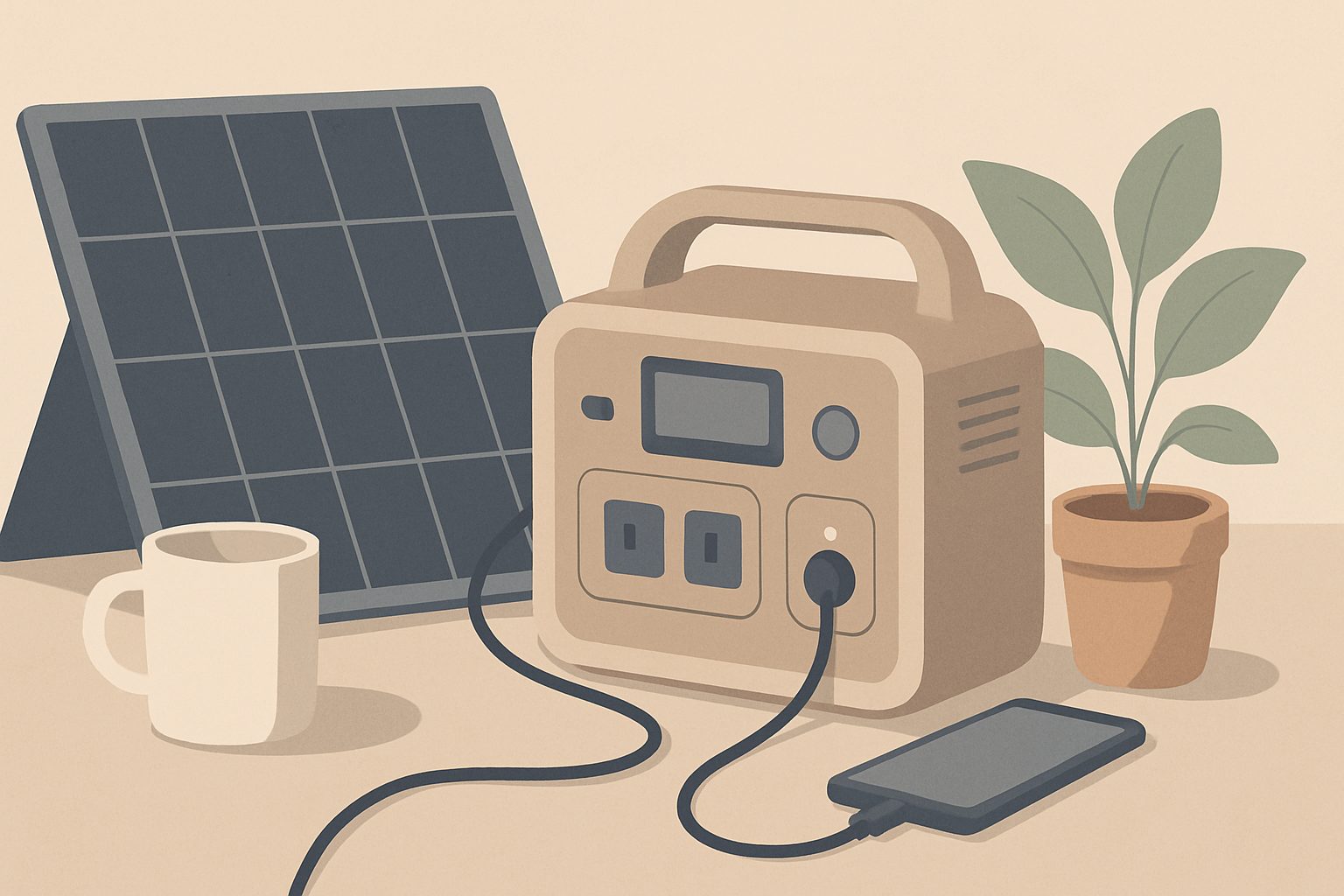
A portable solar generator is a self-contained unit—typically a battery pack with built-in inverter, charge controller, and outlets. You can move it around your garden or take it on holiday. Most models range from 500Wh to 3kWh capacity, weigh 5–30kg, and cost £500–£3,000. They charge from solar panels (usually bought separately) or a standard plug socket.
Fixed home battery storage is permanently installed alongside your existing solar panels. Systems like Tesla Powerwall 3, GivEnergy All-In-One, and Solis ResiBattery bolt to your wall or sit in a cupboard. Capacities run 5–15kWh, installation costs £5,000–£15,000, and they integrate with your home's electrical system via a dedicated inverter.
The core trade-off: portability versus integration. Portable generators go where you need them. Fixed batteries become part of your home's energy backbone.
Installation and Complexity
Installing a portable solar generator takes minutes. Unbox it, connect your solar panels via a charge controller (if you don't have one already), and start using it. No electrician needed. You'll need to manage charging manually—deciding when to plug it in or wait for sun.
Fixed battery storage requires professional installation. A qualified electrician integrates the battery with your consumer unit, solar inverter, and meter. This is a full-day job and often involves application paperwork with your electricity distributor. It's more disruptive upfront but becomes invisible once finished.
If your home has no solar panels yet, adding a portable generator with a small panel kit (typically 400–600W) costs significantly less than installing solar plus a fixed battery. If you already have panels, fixed storage integrates more cleanly.
Cost and Payback
A portable system costs less upfront. A 2kWh generator plus panels: around £1,500–£2,500. A fixed 10kWh battery with installation: £8,000–£12,000.
But consider the financial angle. Fixed batteries qualify for the Smart Export Guarantee (SEG) if your solar setup meets the criteria. Many energy companies pay 15–20p per kWh for surplus power you export to the grid. Over 10 years, this can offset £1,500–£3,000 of your battery cost.
Portable generators do not qualify for SEG payments. You use the stored energy yourself or lose it. This matters if you generate more than you consume.
For cost-per-usable-kilowatt-hour, fixed storage wins over time if you have grid export income. Portable wins if you need flexibility and plan to use it only occasionally.
Portability and Use Cases
Portable generators excel in specific scenarios:
- Taking a camper van on holiday with independent power
- Powering a garden shed, garage, or outdoor workshop
- Backup power during outages (you own the system outright)
- Renting accommodation where home modifications aren't possible
- Testing solar energy before committing to a full installation
Fixed batteries are for people who've already invested in rooftop solar and want to maximise self-consumption. You benefit from round-the-clock energy availability—charging overnight from panels, discharging during peak demand hours (usually 4–9 pm).
Self-Consumption and Efficiency
A fixed battery system optimises your home's energy flow automatically. Your solar inverter measures consumption in real time and charges the battery during peak production, then discharges it when panels aren't generating. This maximises the solar energy you use yourself rather than exporting it cheaply.
A portable generator requires manual attention. You need to monitor when it's charged and when you're using power. This works fine for deliberate use cases—powering workshop tools, camping—but becomes tedious as a daily energy-management tool.
Fixed batteries are also more efficient electrically. They're built for frequent charge–discharge cycles and lose less energy to heat. A high-spec fixed battery (Tesla Powerwall, GivEnergy) achieves 90–95% round-trip efficiency. Portable generators, especially budget models, may lose 10–15% more.
UK-Specific Considerations
The UK's climate matters. Fixed batteries are dimensioned for British winter conditions, where you might generate 20–30% of summer output. A 10kWh fixed battery is realistic for moderate self-consumption.
Portable generators often disappoint in winter. A 2kWh unit charged by portable panels produces little power on grey November days. If you need winter backup, you'll be plugging into mains regularly, undermining the independence benefit.
The Smart Export Guarantee is a UK-specific advantage for fixed systems. If you want to monetise excess solar generation, only a fixed battery with an inverter that reports to the grid will qualify.
Which Should You Choose?
Choose a portable solar generator if:
- You want to test solar energy without major expense or commitment
- You rent or plan to move within five years
- You need power for travel, garden projects, or occasional backup
- Your home isn't suitable for rooftop solar
- You prefer to avoid electricians and paperwork
Choose fixed home battery storage if:
- You own your home and plan to stay for 10+ years
- You already have solar panels or are installing them
- You want daily energy optimisation and grid export income
- You can manage the upfront cost and installation process
- You want set-and-forget reliability
The Verdict
These systems aren't really competitors—they solve different problems. A portable generator offers affordable flexibility and independence. Fixed battery storage offers integration, efficiency, and long-term financial returns.
Many homeowners choose portable generators first. If you use it regularly and enjoy the independence, upgrading to fixed storage makes sense later. If you rarely use it, you've learned something valuable about your energy needs at low cost.
Your decision ultimately depends on whether you prioritise flexibility and upfront affordability, or efficiency and long-term return on investment.
More options
- EcoFlow DELTA Pro Portable Power Station (Amazon UK)
- Jackery Explorer 2000 Plus Solar Generator (Amazon UK)
- Bluetti AC200P Portable Power Station (Amazon UK)
- EcoFlow 220W Bifacial Solar Panel (Amazon UK)
- Jackery SolarSaga 200W Solar Panel (Amazon UK)