What Is a Solar Generator? How It Works – Explained for UK Buyers
A solar generator isn't a single box—it's a system that converts sunlight into usable electricity through a chain of components working together. If you've wondered whether solar power could replace a petrol genset in your caravan, garden shed, or as a backup supply, understanding how the pieces fit together will help you decide what you actually need.
What Is a Solar Generator?
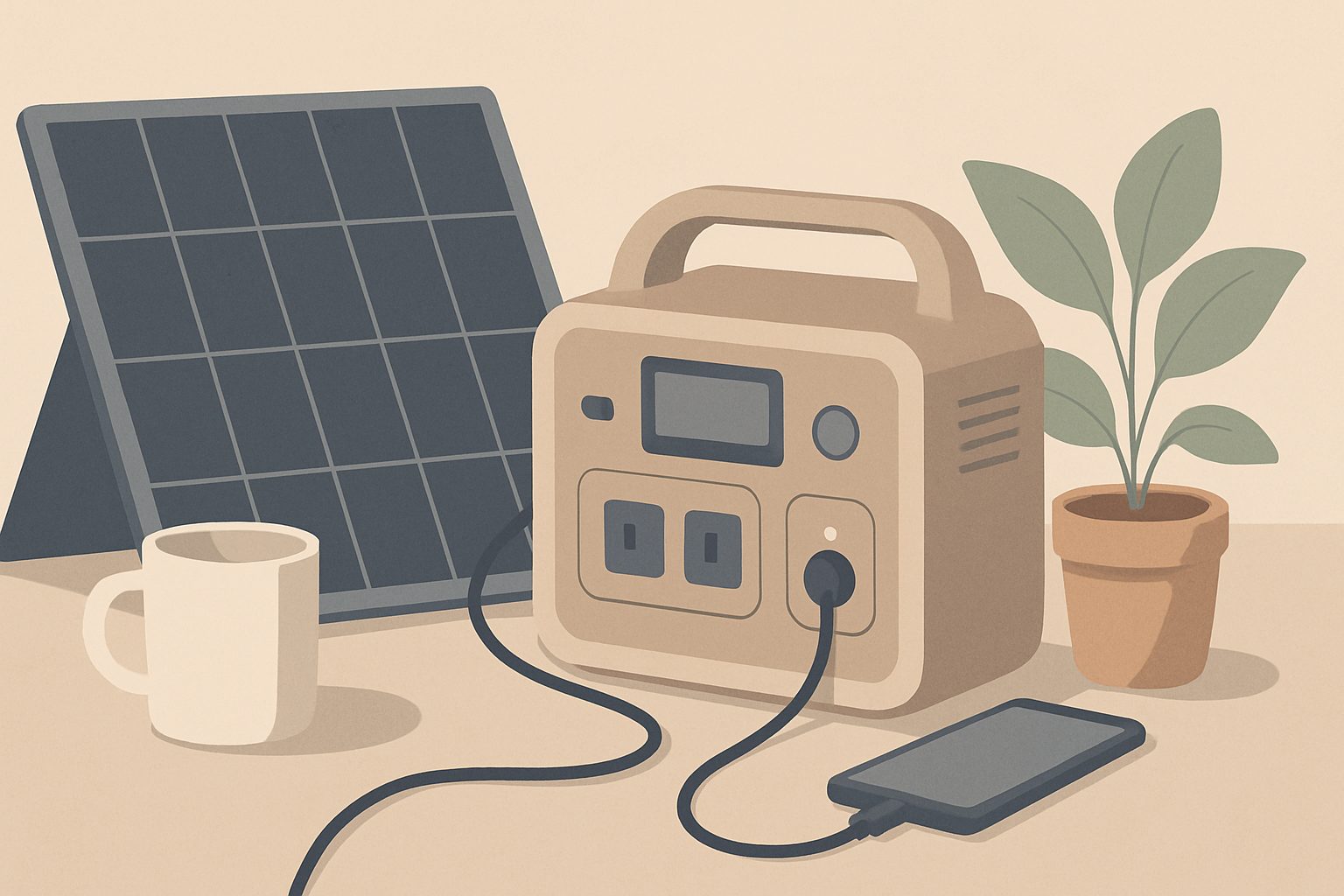
A solar generator is a portable energy system built around a rechargeable battery—usually lithium (LiFePO4)—paired with solar panels, a charge controller, and an inverter. Unlike a petrol generator, which burns fuel to create electricity on demand, a solar generator stores energy from the sun and releases it when you need it.
The term "solar generator" is a bit of a marketing catch-all. Strictly speaking, the solar panels do the generating; the battery does the storing; the inverter does the converting. But bundled together as a system, they're what most people call a solar generator.
The appeal is immediate: no fuel to buy, no engine maintenance, no smell, no noise beyond a quiet fan. For UK gardens and occasional off-grid use, that's a genuinely different experience from a diesel genset.
How Solar Generators Work: The Component Chain
Step 1: Solar Panels Capture Sunlight
Polycrystalline or monocrystalline solar panels mounted on your garden or caravan roof (or ground-mounted) absorb photons and release electrons, creating DC (direct current) electricity. In the UK, panel output varies wildly with cloud cover and season. A 400 W panel rated at full sun might deliver 100–150 W on a typical cloudy afternoon.
The panels are connected in series or parallel to feed the charge controller at a higher voltage, which makes the system more efficient.
Step 2: MPPT Charge Controller Manages Flow
The charge controller (most modern ones use MPPT—Maximum Power Point Tracking) sits between the panels and battery. Its job is twofold:
- Voltage conversion: Solar panels produce variable voltage depending on sun angle and temperature. The MPPT adjusts this to match the battery's requirements, reducing wasted heat.
- Protection: It prevents overcharging, disconnects if the battery is full, and protects against reverse current if panels are shaded.
MPPT is more efficient than simpler PWM controllers, especially in UK weather where panel output fluctuates. The difference can be 15–30% more energy harvested.
Step 3: Battery Stores the Energy
Modern solar generators use LiFePO4 (lithium iron phosphate) batteries—chemically stable, safe, and long-lived (typically 3,000–5,000 charge cycles). Lead-acid batteries are cheaper upfront but bulkier, heavier, and need maintenance; they're rare in new solar generators now.
The battery capacity is measured in watt-hours (Wh). A 5 kWh battery can theoretically power a kettle (3 kW) for roughly 90 minutes before depleting, though you'd rarely want to run the battery flat.
Step 4: Inverter Converts DC to AC
Your kettle, laptop, and power tools expect AC (alternating current) electricity at 230 V, 50 Hz. The inverter converts the battery's DC output to AC. Pure-sine inverters (the standard in modern systems) produce clean, smooth electricity that sensitive equipment likes. Cheaper modified-sine inverters can cause hum in speakers and may shorten motor lifespan.
The inverter's power rating (in watts) must exceed your device's peak demand. A 3 kW kettle needs an inverter rated for at least 3.5 kW to handle the inrush current.
Solar Generators vs. Petrol Generators
| Aspect | Solar Generator | Petrol Genset | |---|---|---| | Noise | 0–30 dB (fan only) | 70–100 dB | | Fumes | None | CO, CO₂, particulates | | Fuel cost | Free after purchase | £1–2 per litre, continuous use | | Maintenance | Battery replacement every 5–10 years | Oil changes, spark plugs, winterising | | Start-up time | Immediate (if charged) | 30 seconds, pull-cord or electric start | | Reliability | Weather-dependent; fine for supplementing grid power or camping | Works regardless of weather, any time | | Portability | Heavy but no fuel spillage | Lighter gensets exist; fuel is hazardous |
When a solar generator wins: Campsites, garden offices, off-grid cabins, daytime site work, charging devices, running fans or lights overnight.
When a petrol genset is better: 24-hour building sites, winter backup power, long rainy spells, or situations where you need guaranteed power on demand.
Most UK buyers who choose solar aren't replacing a genset—they're ditching one because their actual needs (weekend camping, garden shed tools, event power) work better with quiet, fume-free solar.
Why UK Weather Doesn't Disqualify Solar
The UK doesn't get desert sun, but it gets enough. A south-facing 400 W panel will generate 1–2 kWh per day in winter, 4–5 kWh in summer—average around 2.5 kWh annually per watt of rated capacity. That's enough to keep a battery topped up for regular use.
The catch: overcast November afternoons won't charge fast. If you need guaranteed power in December, you're relying on pre-stored energy, not real-time solar input. That's why solar generators work best paired with mains electricity—topping up via solar when the sun's out, topped up by mains or a backup charger when it's not.
Worth Buying?
If you need portable, silent, zero-fuel power for intermittent use—camping, events, garden work, daytime loads—a solar generator makes practical sense. The maths work if you'll use it regularly enough to justify the upfront cost (£800–£3,000+ depending on capacity).
If you need round-the-clock backup for a critical load (heating, medical equipment, security), a solar system alone isn't reliable; you'd add a petrol genset or stay grid-connected with batteries. If you rarely need backup power, hiring a genset for the odd day is cheaper.
For most UK homes and campers, a modest solar generator (2–5 kWh) is a low-hassle way to chip away at grid demand on sunny days and have emergency power when mains fails. No moving parts, no smell, no fuss—just panels soaking up whatever light British weather offers.
More options
- EcoFlow DELTA Pro Portable Power Station (Amazon UK)
- Jackery Explorer 2000 Plus Solar Generator (Amazon UK)
- Bluetti AC200P Portable Power Station (Amazon UK)
- EcoFlow 220W Bifacial Solar Panel (Amazon UK)
- Jackery SolarSaga 200W Solar Panel (Amazon UK)